A Civilizational Diagnosis · A Falsifiable Cure
We were too unconscious to collect it. Historical Apoplexy names the disease, stages its progression, and prescribes the cure across state, federal, and international jurisdictions.
Book Two · The Policy Compendium
A policy thesis for the future…
In the Register of 1776
A Civilizational Diagnosis · A Falsifiable Cure
Whole regions of useful knowledge go dark while the body of the society keeps functioning. The forgotten solution is then re-presented as a new discovery, and the cycle starts over. Historical Apoplexy names the disease, stages its progression, and prescribes the cure across state, federal, and international jurisdictions.
Book One
Epistemic Senicide and the Stroke-Like Loss of Civilizational Memory
"The patient has access to the archive. The patient cannot retrieve it."
The diagnostic volume. A trade book that names the civilizational disease of forgetting solved problems, built on the underlying ten-paper academic series. Worked examples that any literate citizen can verify: $32 billion ends domestic hunger versus $496 billion in annual U.S. food-industry markup over production cost, a 15× ratio. 293,000 U.S. manufacturing facilities run at 77% utilization, yielding 19.5 to 29.3× overcapacity. The U.S. military commissary has run at-cost since 1867. At-cost distribution proven across one hundred and fifty-eight years.
Drawing on Ibn Khaldun's fourteenth-century ʿumrān, Spengler's morphological cycles, Quigley's instrument-to-institution dynamic, and Tainter's diminishing returns, Historical Apoplexy names the disease and its three faces: Historical Apoplexy (the state of unconsciousness a civilization enters when cut off from its accrued prior knowledge), Apoplectic Plagiarism (the unconscious re-presentation of forgotten solutions by people who do not know the prior art existed), and Epistemic Senicide (the unconscious severance from parental wisdom — operating through direct industry targeting, structural market pressure, and the receive-end failure of an education system that no longer transmits the lineage of any subject).
Read Book OneThe Vocabulary of the Disease
Three are coined for the work — Historical Apoplexy, Apoplectic Plagiarism, Epistemic Senicide. The others are drawn from the surrounding lineage. All six anchor the series.
Book Two · The Policy Compendium
A policy thesis for the future…
In the Register of 1776
Book Two · After the Diagnosis
"The first book diagnosed the disease. This book is the treatment."
The companion to Book One. Thirty-three U.S. state adaptations, three federal adaptations chartering an American Productive Capacity Authority, fifteen international adaptations spanning four continents, and a first sub-national adaptation for Alaska. Each bill drafted in the legal idiom of its own jurisdiction.
See the CompendiumTwo Further Historical Apoplexy Works
"A civilization's images of its own future are among the first things it forgets it ever had."
Founding Fathers of Futurism and Founding Mothers of Futurism carry the recovery argument of the Resuscitation Document into culture: the artists, inventors, and scientists who imagined tomorrow first, and the pattern by which each generation forgets the one that dreamed before it. Like the two volumes above, they are distinct works in the Historical Apoplexy grouping, not a series.
Three Federal Legislative Adaptations · 2026
Every American a shareholder. Non-transferable shares. Citizen dividend on the Alaska Permanent Fund model. Revenue pooling on the ANCSA Section 7(i)/(j) model. SCOTUS-validated funding via the Universal Service Fund mechanism upheld in FCC v. Consumers' Research (2025). American institutional roots only.
$50B Treasury · up to 5% USF · 50% citizen distribution · 12 Regional Corps · Local taxing districts
The comprehensive draft. All six American chartering models combined into a single statute. 74 pages.
$100B Treasury · NO industry assessment · 75% citizen distribution · ANCSA-anchored
The cleanest "no new taxes" framing. ANCSA structure applied to every American citizen. 56 pages.

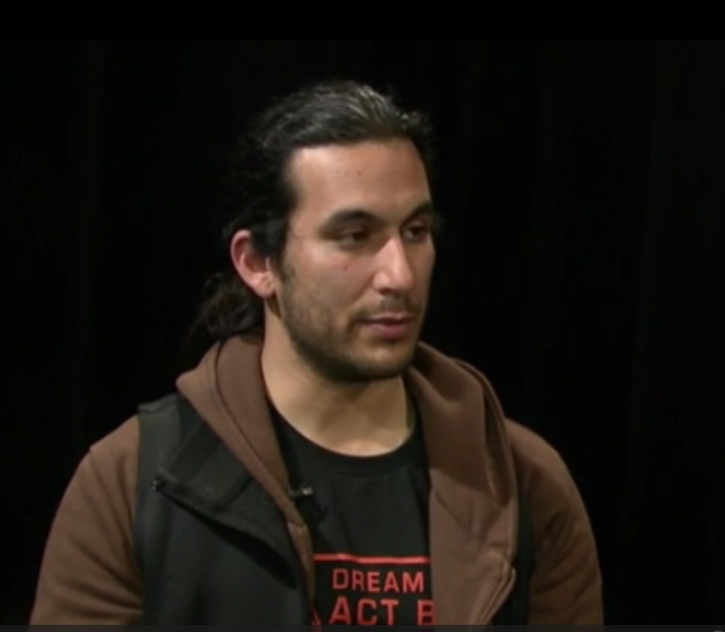

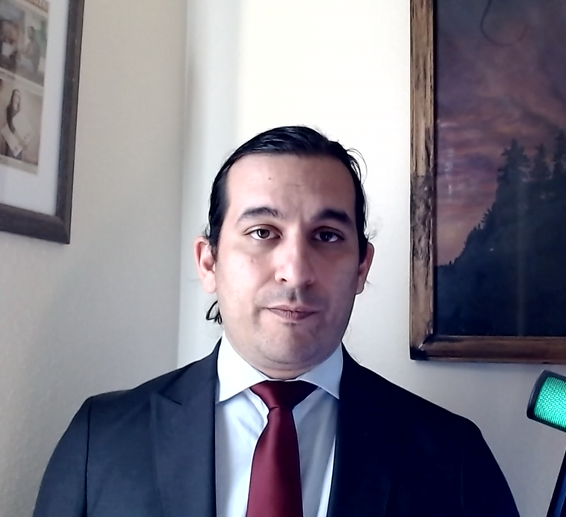
Imran Cooper writes memoir and civilizational nonfiction from the inside out. Kentucky-raised, he has run political campaigns, founded a research foundation, bought and run a restaurant, and now builds AI systems for small businesses. His books trace a single argument across multiple registers: that the things we keep forgetting, we are choosing to forget.
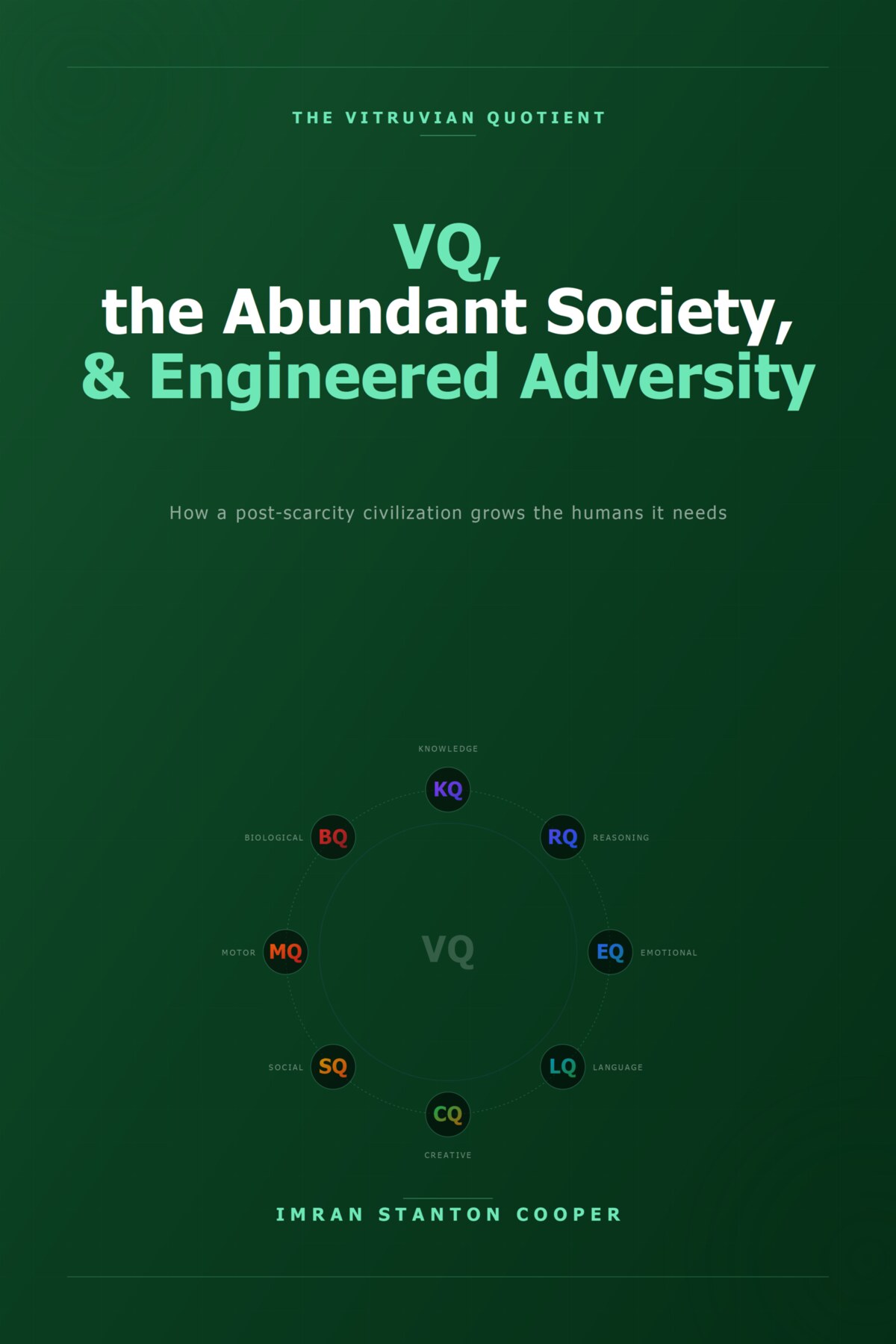
He is the author of Historical Apoplexy, the ten-paper academic series and forthcoming trade book that names the civilizational disease of forgetting solved problems; the forthcoming companion volume Historical Apoplexy After the Diagnosis: The Policy Compendium of an Abundant Society; the Futurism works Founding Fathers of Futurism and Founding Mothers of Futurism, which carry the recovery argument into culture; and the memoirs Tall Poppied, The Full Arc, and One of the Good Ones. He is also the architect of the Vitruvian Quotient (VQ), an eight-domain framework of human capability.
In 2012 he published RAGE Re-entanglement, a blog that applied Quigley's seven phases of civilizational evolution to United States history with literal correspondences: the Civil War as the Age of Conflict, the World's Fair era as Universal Empire, the arrival of White Castle and the spread of fast food as the opening of gradual Decay, then peak modified-cigarette use in the 1960s as Decay's high mark, the 2008 collapse as its downhill. The seventh phase, Invasion, was left deliberately open, with the provocation that an invading force need not be external. The closing argument alluded to the cycle restarting.
Available for Acquisition · Press · Long-Form Conversation
Two complete Historical Apoplexy trade volumes available for acquisition. Additional manuscripts in adjacent lanes available on request. Direct-to-author or via agent.
Two complete trade volumes available for acquisition. Direct-to-author or via agent. Quiet submission preferred.
Comp shelf: Diamond Collapse, Turchin Ages of Discord, Acemoglu Why Nations Fail, Pinker The Better Angels of Our Nature, Tainter The Collapse of Complex Societies, Sachs The End of Poverty.
"Khaldun named the cycle. Spengler named the morphology. Tainter named the diminishing returns. Cooper named the mechanism."
The two Historical Apoplexy volumes anchor the work. A Vitruvian Quotient trade volume sits adjacent. Memoirs (Tall Poppied, The Full Arc, One of the Good Ones) sit in the literary-trade lane and are available on request.
Trade-side comp shelf for the framework volume: Dweck Mindset, Goleman Emotional Intelligence, Duckworth Grit, Sapolsky Behave, Cialdini Influence.
Available for long-form conversation on the abundance lane, civilizational theory, the Replication Threshold, and the legislative compendium.
Three-book arc to talk against: the diagnostic volume, the policy compendium volume, and the human-intelligence framework volume. The 2012 RAGE Re-entanglement blog is the predictive-voice credential: Quigley's seven phases applied to United States history with literal correspondences — Civil War as Age of Conflict, World's Fair as Universal Empire, White Castle and fast food as gradual Decay opening, peak modified-cigarette use in the 1960s as Decay's high mark, the 2008 collapse as its downhill. The seventh phase, Invasion, left deliberately open with the provocation that an invading force need not be external. The closing alluded to the cycle restarting.
Adjacent Work
The two Historical Apoplexy volumes are the focus of this site. The full catalog, including the memoir program and the Vitruvian Quotient titles, lives at imran.theamanuensis.com/books.